
Hari ke-2: Studi yang Mungkin Ada atau Mungkin Tidak Ada
Nextdoor baru-baru ini menerbitkan artikel LinkedIn lainnya, kali ini menyoroti survei tentang antusiasme FIFA dan negara tetangga Kanada dalam menjadi tuan rumah sebagian dari acara olahraga terbesar di dunia.
https://dailyhive.com/vancouver/vancouverites-split-hosting-fifa-world-cup
Saat saya membacanya, satu pertanyaan langsung terlintas di benak saya:
Di mana tautan untuk meminta studi lengkapnya?
Saya tidak bisa menemukannya.
Apakah penelitian lengkapnya benar-benar tersedia untuk ditinjau publik? Atau ini contoh lain di mana citra bertetangga yang baik hanya berhenti pada bagian pemasaran saja?
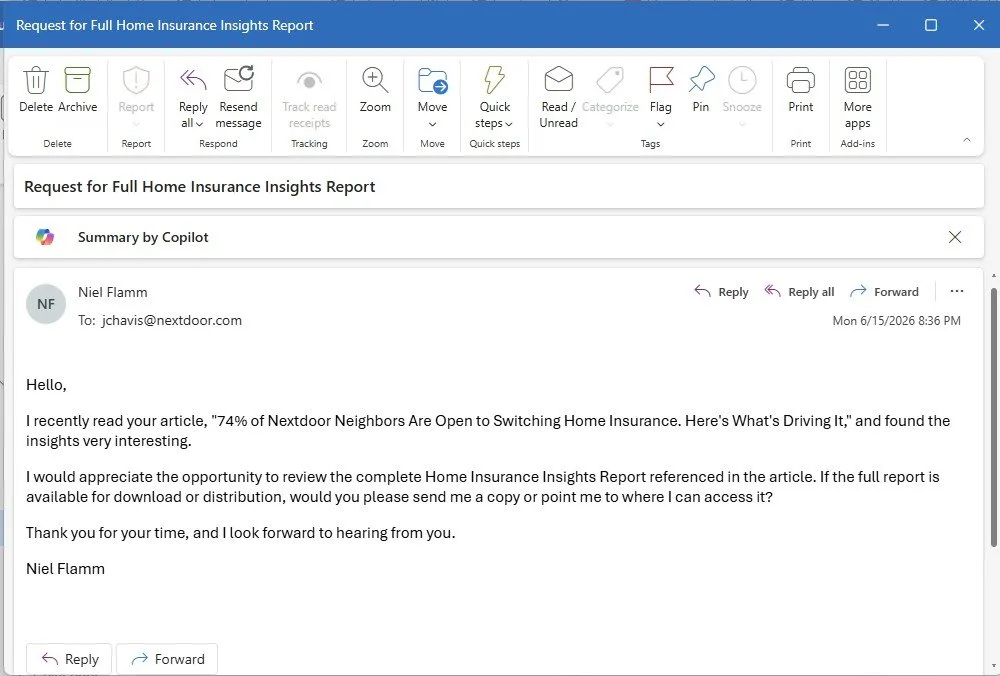
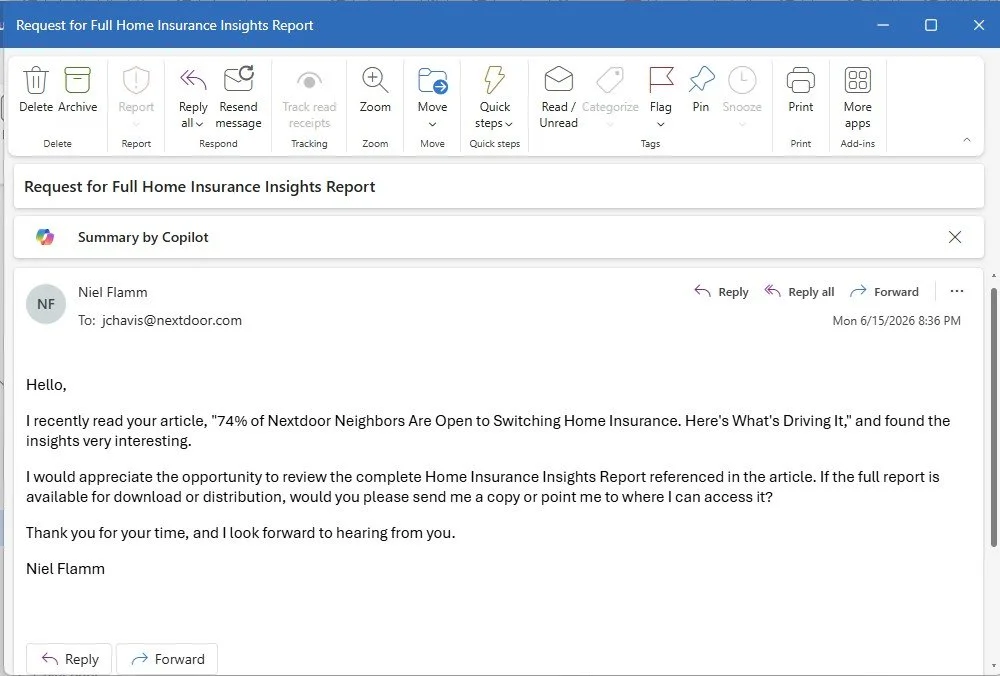
Ini adalah hari ke-2 sejak saya mengirimkan permintaan langsung kepada Jacob Chavis untuk studi asuransi lengkap yang dirujuk dalam publikasi Nextdoor lainnya
Sejauh ini, saya telah menerima:
Tidak ada laporan.
Tidak ada konfirmasi.
Tidak, "Kami sedang mengerjakannya."
Tidak. "Anda akan segera menerimanya."
Bahkan penolakan yang sopan pun tidak diberikan
Hal ini hampir membuat saya bertanya-tanya apakah ada kebijakan tidak resmi yang mengatakan, "Jangan berinteraksi dengan Niel Flamm."
Organisasi sering menyangkal memiliki praktik tidak resmi, sementara karyawan menggambarkan budaya yang menunjukkan sebaliknya. Bertahun-tahun yang lalu, petugas di NYPD menuduh adanya ekspektasi produktivitas tidak resmi meskipun ada penolakan formal. Wells Fargo menjadi terkenal meskipun perusahaan tersebut tidak memiliki kebijakan resmi yang mendorong pembuatan rekening palsu. Karyawan di operator seluler juga menggambarkan "metrik kinerja" yang terasa sangat mirip dengan kuota.
Hal ini membawa saya pada sebuah tantangan yang menyenangkan.
Jika ada siapa pun dari Nextdoor yang ingin memberikan bukti yang dapat diverifikasi secara anonim bahwa ada kebijakan tidak resmi yang mengarahkan karyawan untuk tidak berinteraksi dengan saya, kirimkan ke:
Informasi tersebut harus dapat diverifikasi dan bukan hasil buatan AI.
Orang pertama yang memberikan dokumentasi yang dapat dipercaya akan memenangkan kartu hadiah untuk makan malam untuk dua orang di restoran favorit Anda di lingkungan sekitar.
Siap...
Mengatur...
Pergi.
Nextdoor's Latest "Study" or Just Another Sales Pitch?
For months, I've been requesting transparency from Nextdoor leadership regarding the surveys and research they publish. I've asked for methodology, sample sizes, demographics, confidence intervals, moderation metrics, and the data behind the headlines.
The questions have largely gone unanswered.
Now we're presented with another report claiming that 74% of Nextdoor neighbors are open to switching home insurance providers. To me, this comes across more like a marketing vehicle designed to encourage insurance companies to advertise on the platform rather than independent research.
Suppose the data is legitimate; great. Show us the methodology. Show us the complete report. Let everyone evaluate the findings for themselves.
Today I sent an email to Jacob Chavis requesting the comprehensive research behind the study. We'll see what happens.
Based on my past interactions with the company, I don't have high expectations. Requests for information have historically gone unanswered or taken an unreasonable amount of time to respond.
Transparency builds trust. Marketing headlines without supporting data create more questions.
I'll happily update this post if and when the full report is provided.
South Carolina Voters: Earn $125 for Two Hours of Your Time
I'm helping spread the word about a South Carolina voting market research study that will take place via Zoom on Wednesday, June 10, from 7:00 PM to 9:00 PM.
The study pays $125 for participation and is looking for White/Caucasian males in South Carolina who are comfortable participating on camera during a Zoom discussion.
If you think you qualify and would like more information, send me a direct message. Feel free to share this opportunity with someone who may be interested. Seeking White/Caucasian males in South Carolina who are comfortable appearing
I Asked A Silly Question. I Won A Silly Prize.
In my previous post, I questioned the transparency of a Nextdoor survey and joked:
"Has nobody at Nextdoor watched John King on CNN election night?"
After thinking about it, that was a silly question.
The answer is obviously no.
If anyone from the top down — including CEO Nirav Tolia — spent much time watching John King drill into data, methodology, assumptions, and details behind the numbers, perhaps we'd see more transparency in areas like moderation, appeals, and internally published survey results.
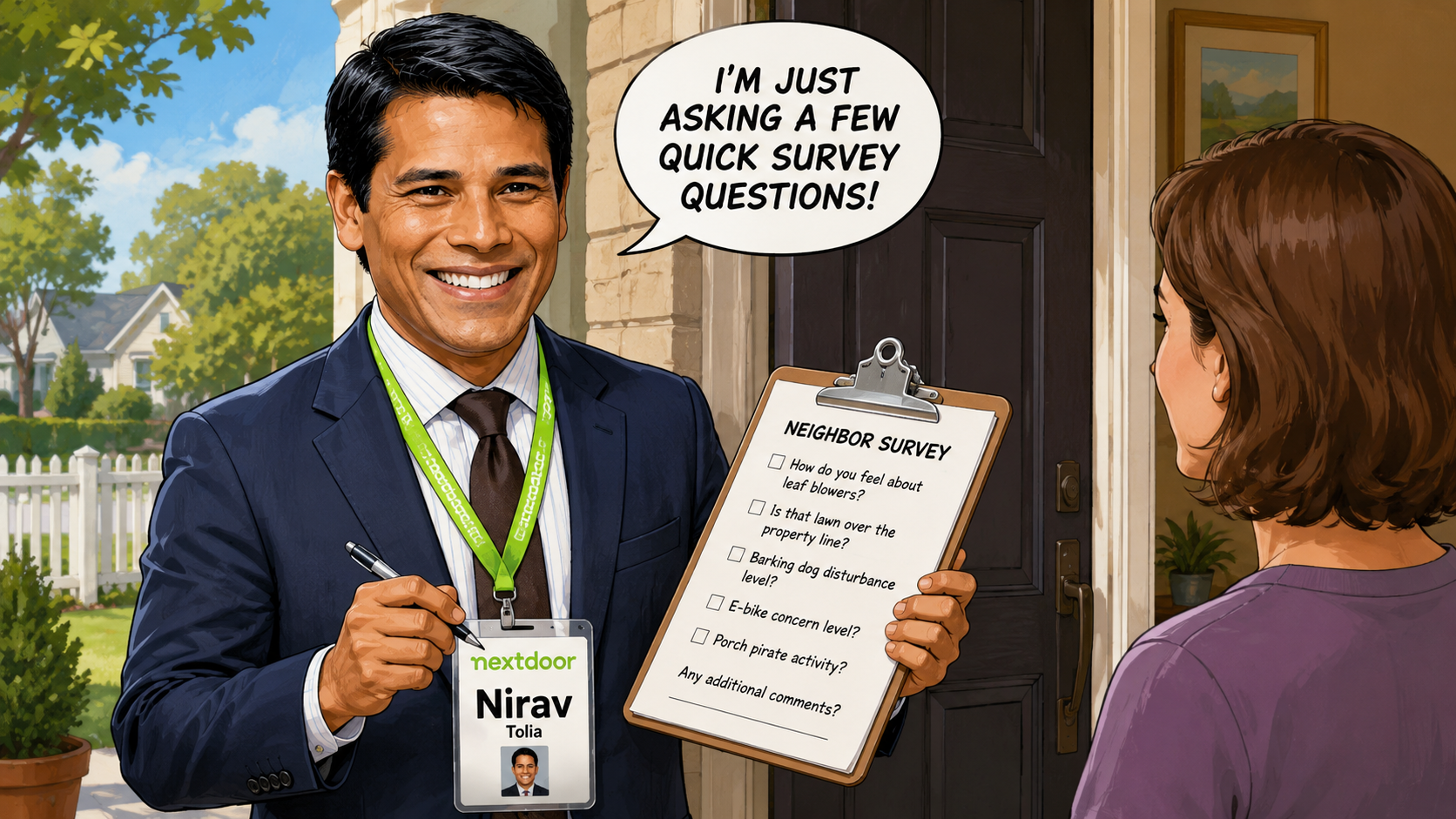
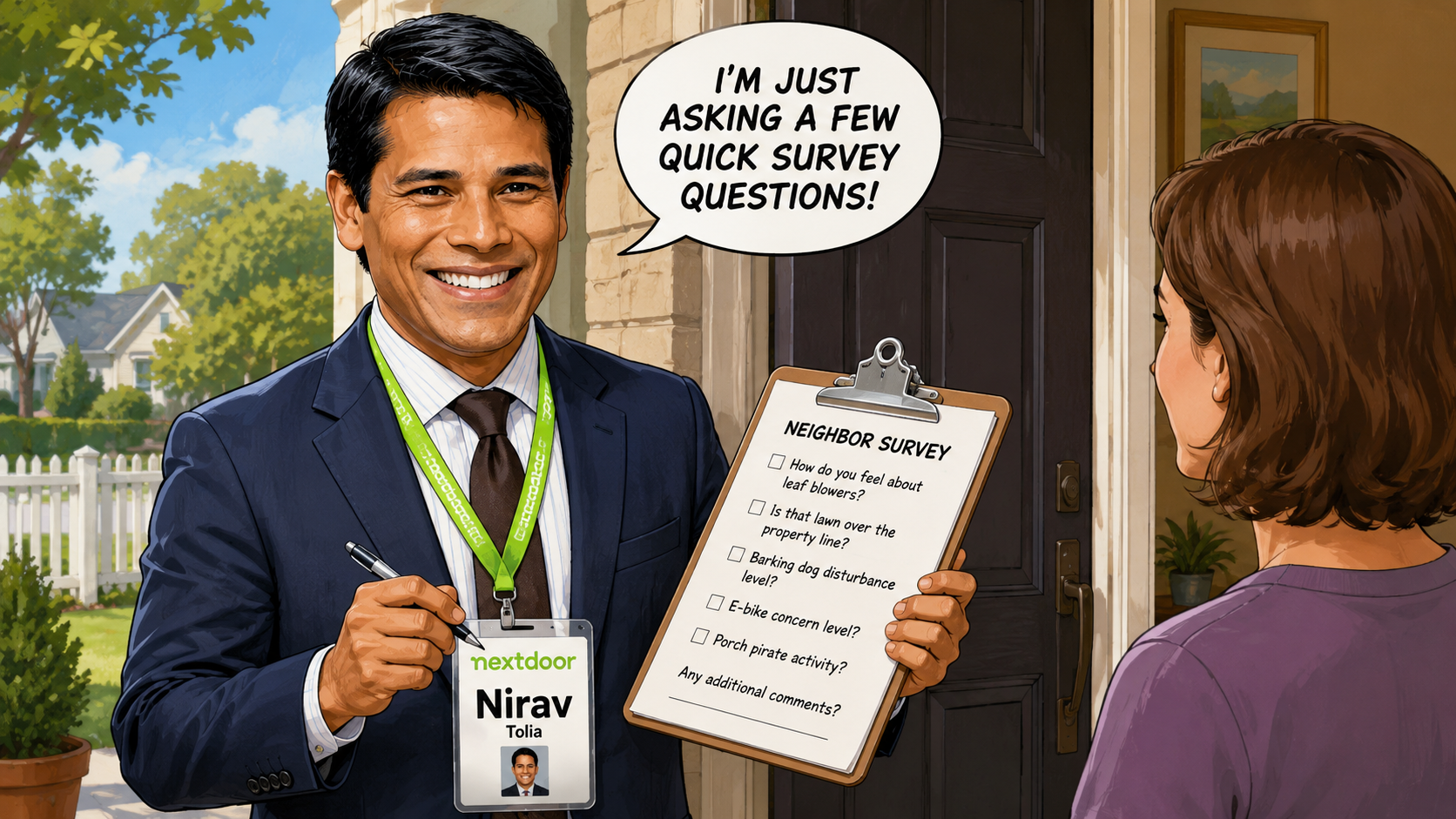
Then I started thinking about other groundbreaking studies Nextdoor could publish without providing full methodology:
🏆 The Lawn Blade Encroachment Survey
How many inches onto a neighbor's property can grass grow before it becomes an international incident?
📦 The Missing Amazon Package Emotional Impact Index
After receiving a delivery notification, how long should a neighbor wait before accusing porch pirates, nearby residents, and organized crime?
🍂 The Neighborhood Leaf Migration & Border Security Report
Who owns leaf cleanup responsibilities after leaves illegally cross property lines?
🚲 The Emergency E-Bike Teen Threat Assessment
Which represents the greater threat to civilization: teenagers riding e-bikes or teenagers staying indoors staring at screens?
🐕 The Official Barkonomics Report
At what decibel level and dog count do connected neighbors formally declare war on one another?
Maybe the results would be fascinating.
Just don't ask for the sample size, methodology, demographics, margin of error, weighting, response rates, or full questionnaire.
Those details might get lost somewhere
Subscribe to NielFlamm.com.
When Data Is Shared, Methodology Matters
Nextdoor recently published a research article titled:
"What Neighbors Want in 2026: Resolutions, Spending Shifts, and Community Connection"
Sources include internal Nextdoor surveys, but the public materials don't appear to disclose key research details such as:
• Sample size
• Margin of error
• Response rate
• Sampling methodology
• Demographic composition
• Weighting methodology
• Exact survey questions
• Full survey results
• Independent review or validation
As someone who has spent years working with assessments, reporting, training metrics, and stakeholder analytics, one of the first questions I ask is:
"How was the data collected?"
Has no one at Nextdoor watched John King work the CNN Big Board on election night?
He doesn't simply point at a state and declare a result. He drills down into counties, demographics, turnout, voting history, margins, and methodology. The audience gets to see how the conclusion was reached.
That's what builds credibility.
Without methodology, we're left with conclusions but limited ability to evaluate the quality of the research behind them.
I'm not suggesting the findings are inaccurate.
Transparency builds trust.
If the research is strong, why not publish the complete methodology, survey instrument, respondent demographics, and supporting data? Doing so would allow advertisers, investors, journalists, researchers, and users to assess the findings and understand the limitations independently.
Data is most valuable when others can examine how the conclusions were reached.
What level of transparency should companies provide when citing internal survey research in public-facing reports?
Subscribe to NielFlamm.com.